+028-87751246
rnktools@vip.163.com
en


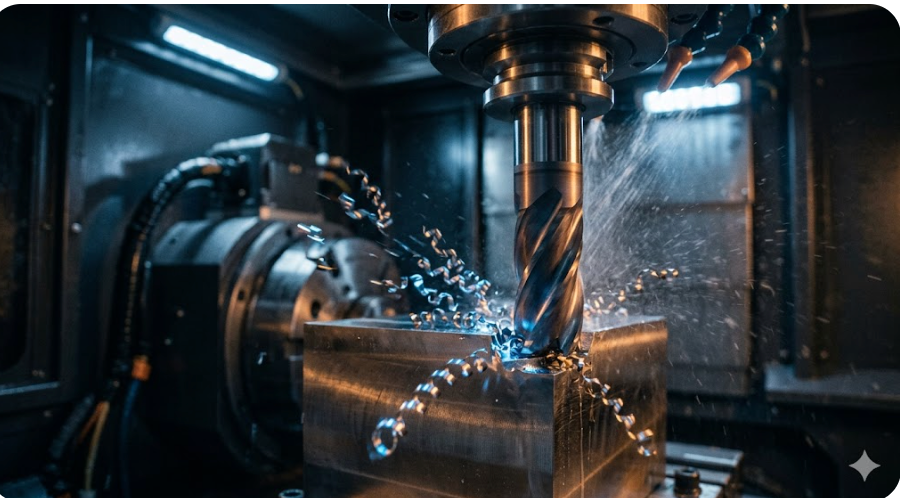
In the modern manufacturing landscape, precision and speed are not just competitive advantages—they are baseline requirements. For production managers and CNC engineers, the constant challenge is finding the perfect balance between aggressive material removal rates (MRR) and prolonged tool life. Often, the bottleneck in achieving optimal ROI lies not in the CNC machine itself, but in the cutting tools utilized.
This guide explores the technical intricacies of high-performance milling tools and how strategic tooling upgrades can dramatically reduce your cost per part.
Many procurement strategies focus heavily on the initial purchase price of a milling cutter. However, in high-volume manufacturing, tooling costs typically account for only 3% to 5% of the total production cost. The real expenses are hidden in machine downtime, frequent tool changeovers, and high scrap rates due to poor surface finishes.
Investing in advanced milling tools shifts the paradigm from a consumable expense to a strategic investment. By extending tool life and enabling higher feed rates, premium cutting tools directly increase the throughput of your CNC assets, driving down the overall cost per part.
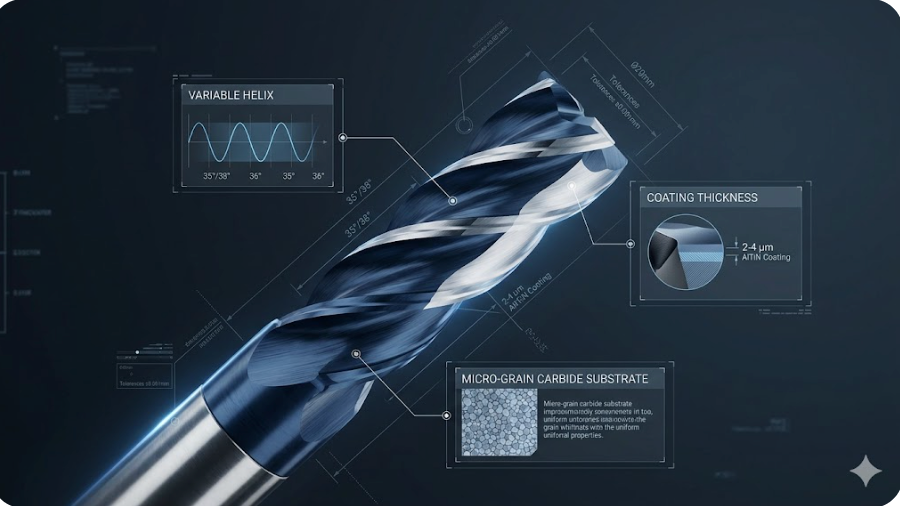
To establish a highly efficient machining process, it is critical to evaluate milling cutters based on their engineering attributes.
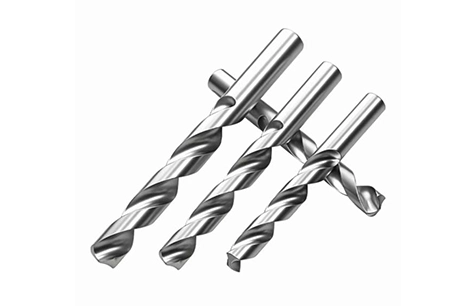
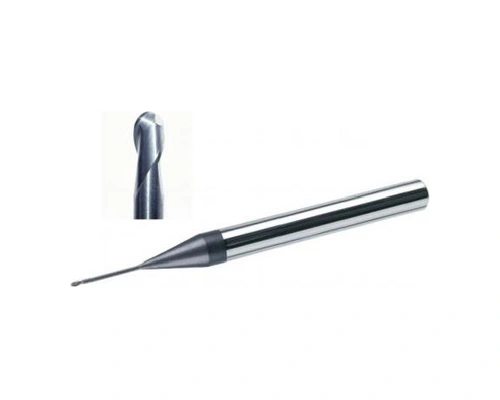
1. Material Substrate: The Solid Carbide Advantage For operations demanding high rigidity and heat resistance, solid carbide milling tools outperform traditional High-Speed Steel (HSS). The micro-grain structure of premium carbide ensures exceptional wear resistance, maintaining sharp cutting edges even during hard machining of materials like titanium or Inconel. As one of the leading carbide reamers manufacturers, RNK applies the same high standards to its solid carbide tools.
2. Advanced Coating Technologies Tool coatings (such as TiAlN or AlTiN) act as a thermal barrier, transferring the heat generated during the milling process into the chip rather than the tool. This is essential for dry machining applications and significantly extends the lifespan of the tool by preventing built-up edge (BUE) and thermal cracking.
3. Optimized Flute Geometry Variable helix and unequal pitch designs are critical for vibration dampening (chatter reduction). This specific geometry allows for stable heavy roughing and produces superior surface finishes during the final pass.
At RNK Tools, we engineer our milling tools specifically to address the pain points of modern CNC machining. Rather than offering generic solutions, our product lines are tailored for specific industry applications, from aerospace components to automotive die-casting molds.
·Exceptional Durability: Manufactured with top-tier carbide substrates, ensuring consistent performance across high-volume production runs.
·Precision Engineering: Strict tolerance control guarantees runout accuracy, maximizing both the tool life and the spindle life of your CNC machinery.
·Versatile Applications: Whether you require face milling, profile milling, or high-speed plunging, our portfolio covers the full spectrum of metalworking needs.
In B2B manufacturing, the right cutting tool is the defining factor between a profitable production run and a costly bottleneck. By understanding the technical parameters of your milling tools and prioritizing overall machining efficiency, you can unlock the full potential of your CNC equipment.
Ready to optimize your machining process and reduce your cycle times? Explore the full range of high-performance RNK Milling Tools today and consult with our technical team to find the perfect tooling solution for your specific application.